
Choosing a stage
Portable Stage Load Capacity Explained
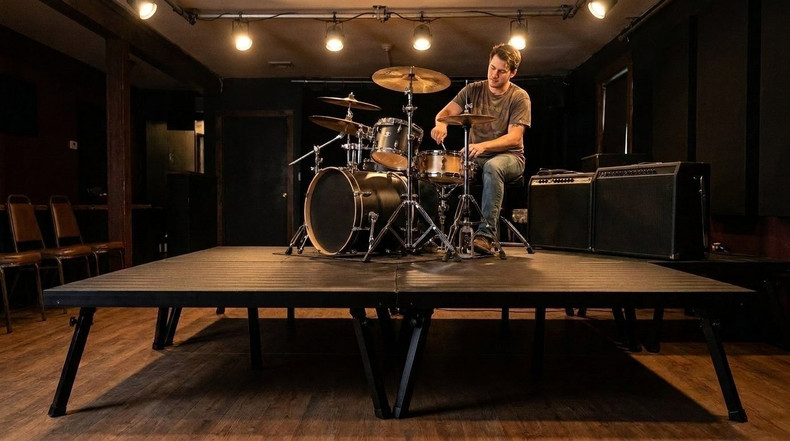
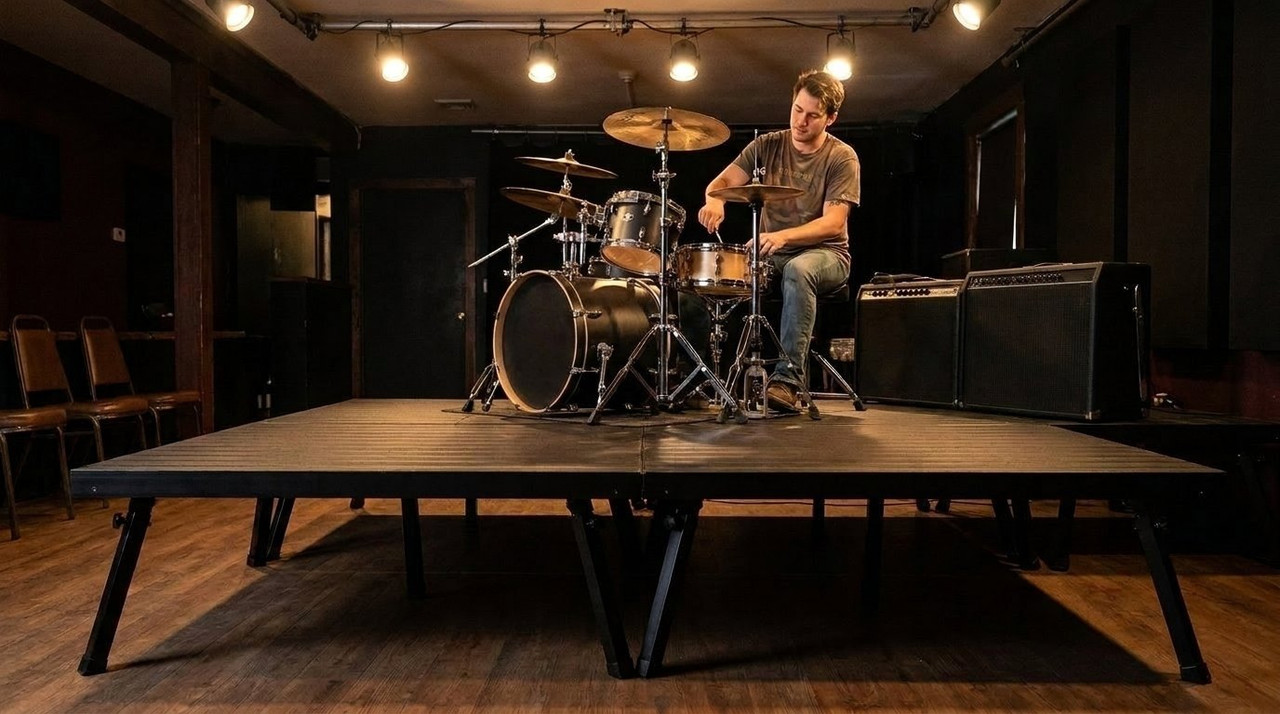
Portable stage load capacity is the weight a stage is rated to carry. Each MyStage deck is a 4 ft x 4 ft (1.22 m x 1.22 m) platform rated to hold up to 3,400 lbs (1,542 kg). How it applies depends on how people and equipment are spread, how they move, and the ground below.
This guide is written for procurement and safety reviewers in Canada who need to sign off on a portable platform before it is bought or used. It explains the load terms you will see in specifications, separates what MyStage has published from what you should confirm in writing, and gives a checklist for your file. Where a point is general practice rather than a MyStage specification, it is labeled as such.
What is the MyStage load rating?
Each MyStage deck is rated to hold up to 3,400 lbs (1,542 kg). That is the verified load figure for the product, and it is stated per deck. Every MyStage stage, from a single 4x4 to a 16x20, is built from that same 4 ft x 4 ft (1.22 m x 1.22 m) deck, so the rating applies to every deck in the layout.
MyStage has not published separate figures for point loads, moving loads, loads per square foot, or loads at each leg height in the facts this guide relies on. Those are the questions to put to MyStage in writing if your review needs them. Do not fill the gaps with figures from other manufacturers or from general tables, because they describe different products.
What do the load terms mean?
Load specifications use a handful of terms that are easy to mix up. The table below defines them in plain language and shows what MyStage has confirmed for each one. The "what to ask" column is a general review practice, not a MyStage or code requirement.
| Term | Plain-language meaning | What MyStage has confirmed | What to ask |
|---|---|---|---|
| Total load | Everything on the stage at once: people, instruments, speakers, furniture, props and any risers. | Each deck is rated to hold up to 3,400 lbs (1,542 kg). | Whether the rating should be read as spread evenly across the deck, and how it applies across a multi-deck stage. |
| Point load | Weight concentrated on a small contact area, such as a piano caster, a drum riser foot, a speaker stand or a lift. | No separate point load figure is published. | The safe point load for your heaviest item, and whether a spreader board or placement over a leg is recommended. |
| Live load | Weight that moves or changes: performers walking, dancing or jumping, and people stepping on and off. | No separate live load figure is published. Each deck has a center leg that reduces bounce. | How the rating applies to dancing, jumping or a group moving in time. |
| Safety margin | The gap between the rated capacity and the load you actually plan to put on the stage. | No safety factor or test method is published. | How the rating was determined, and how much of it your review should plan to use. |
What is the difference between total load and point load?
Total load is the sum of everything on the stage, while point load is how much of that weight lands on one small spot. Two items with the same weight can affect a deck very differently: a heavy item spread across a wide base is gentler on the surface than the same weight sitting on three small feet. That is why a stage can be within its total rating and still need care with one heavy piece of equipment.
For a review, list the heaviest single items separately from the total. Note the size of each contact point (casters, feet, stand bases) and where on the stage the item will sit. That list is what lets MyStage give you a useful answer.
Why does a live load need more care than a static one?
A live load needs more care because moving people push down harder at some moments than their standing weight, and groups moving together can add up. A band that stands still, a choir that sways, and a dance troupe that jumps in unison all put different demands on the same platform, even with the same number of people.
MyStage decks have five legs each, four angled legs plus a center leg that reduces bounce. That helps with how the deck feels underfoot, but it is not a published live load figure. If your event involves jumping, choreography or a crowd on stage, describe it to MyStage and ask how the rating applies.
How should you count performers and equipment?
Count performers and equipment separately, then add them, because each group raises different questions. Use your own measured or manufacturer weights for equipment, and a realistic body weight per person for your group. Do not rely on rough guesses for the heaviest items.
- Performers: the most people who will ever be on the stage at once, including the moment a group walks on, hands off or takes a bow.
- Instruments: drum kits, keyboards, pianos and amplifiers. Note which ones sit on small feet or casters.
- Audio and lighting: speakers, subwoofers, monitors, lighting stands and any truss bases that rest on the deck.
- Furniture and props: lecterns, tables, chairs, set pieces and display items.
- Risers on the stage: anything stacked on top of the decks adds its own weight and concentrates the load under its feet.
- Movement: mark which of these loads move during the event.
Then map where each item sits on the stage plan. A total that looks comfortable on paper can still put most of the weight on one or two decks if the drum riser, the bass amp and the main speakers all end up in the same corner.
Does uneven ground or leg height affect the load?
The ground under the stage matters as much as the deck, because every load ends up passing through the legs into the floor or soil. MyStage decks are designed to make a flat, level surface on uneven ground outdoors, with legs that adjust to level each deck. A level deck on soft grass, though, still depends on what the feet are resting on.
For outdoor events, check the surface under each leg for soft spots, slopes and drainage, and confirm with your venue what the floor or ground can carry indoors. Leg height is another question for MyStage: standard legs adjust from 4 to 28 in (10 to 71 cm), Shorties give 8 and 10 in (20 and 25 cm), and Biggies go up to 36 in (91 cm). Ask whether the rating holds at every setting you plan to use, and whether it applies when the stage sits on castors.
How do you review a portable stage's load capacity, step by step?
- Describe the event. Type of performance, number of people, and whether they stand, walk, dance or jump.
- List every item. Use the checklist above and record a weight for each one from its maker or by weighing it.
- Mark the heavy points. Identify items on small feet or casters and where each will sit on the stage plan.
- Add the totals by deck. Work out roughly what sits on each 4 ft x 4 ft (1.22 m x 1.22 m) deck, not only the whole stage.
- Record the site conditions. Indoor floor type, outdoor surface, slope, and the leg option and height you plan to use.
- Send it to MyStage. Ask how the 3,400 lbs (1,542 kg) per-deck rating applies to your plan, and ask for the answer in writing for your file.
- Check with your venue and local authority. They can tell you whether your event needs any permit, inspection or engineer's review.
Is the MyStage stage certified?
The verified facts behind this guide include the load rating, but no certification, test standard or test method. If your organization requires a certificate, a test report or a specific standard, ask MyStage directly before you order and get the answer in writing. Do not treat the load rating as a certification.
The same applies to building and event rules. Requirements for temporary stages vary by province, municipality and venue, so check with your venue and local authority rather than assuming a rule from another jurisdiction applies.
What should go in a procurement file?
A clear procurement file holds the published specification, your load plan, and the written answers to your open questions. That way the decision can be reviewed later by someone who was not in the room.
- Product page for the deck: 4 ft x 4 ft portable stage deck (US$659), aluminum, black diamond-plate surface, 42 lbs (19 kg) per deck, rated to hold up to 3,400 lbs (1,542 kg).
- Your stage layout and deck count from the Stage Builder.
- Your load list by deck, with heavy point loads and moving loads marked.
- MyStage's written answers on point load, live load, leg height, castors and any certification you require.
- Your venue's and local authority's guidance on the event.
- Warranty terms: MyStage gives a 60-day manufacturer guarantee covering defects.
What does ordering look like from Canada?
Canadian orders ship from our warehouse in Ajax, Ontario, to everywhere in Canada except Quebec. Because orders ship from inside Canada, there are no customs or brokerage steps for the buyer. Freight is quoted per order, so contact MyStage with the products and your postal code, and you get a shipping estimate before ordering.
Prices are in US dollars, and your card issuer converts the charge at its own rate. Confirm any applicable taxes on your quote, and confirm remote and northern addresses when you request it. For the rest of the pre-order checks, see what Canadian buyers should confirm before ordering an event stage, and for rent-or-buy decisions see portable stage rental vs purchase in Canada. You can browse all portable stages on the Canadian store.
Frequently asked questions
How much weight can a MyStage deck hold?
Each MyStage deck is rated to hold up to 3,400 lbs (1,542 kg). Each deck is 4 ft x 4 ft (1.22 m x 1.22 m) and weighs 42 lbs (19 kg) itself. For point loads, moving loads or unusual equipment, confirm your use case with MyStage.
Does a larger stage hold more weight?
A larger stage has more decks, and each deck carries the same rating, but do not simply multiply the rating by the deck count. Weight is rarely spread evenly, so plan the load deck by deck and ask MyStage how the rating applies to your layout.
Can a band with a drum kit and amplifiers use a MyStage stage?
It can be planned like any other load; the deciding question is where the heavy items sit. List the drum kit, amplifiers and speakers with their weights and positions, mark anything on small feet, and send the plan to MyStage to confirm.
Is dancing or jumping on the stage covered by the rating?
MyStage has not published a separate live load figure for dancing or jumping. Each deck has a center leg that reduces bounce, but describe the choreography or crowd activity to MyStage and get a written answer before the event.
Do I need an engineer or permit for a portable stage in Canada?
Rules for temporary stages vary by province, municipality and venue. Check with your venue and local authority for your event, and keep their guidance with your MyStage specification and load plan.