
Choosing a stage
Aluminum vs Steel Portable Stages for Canadian Venues
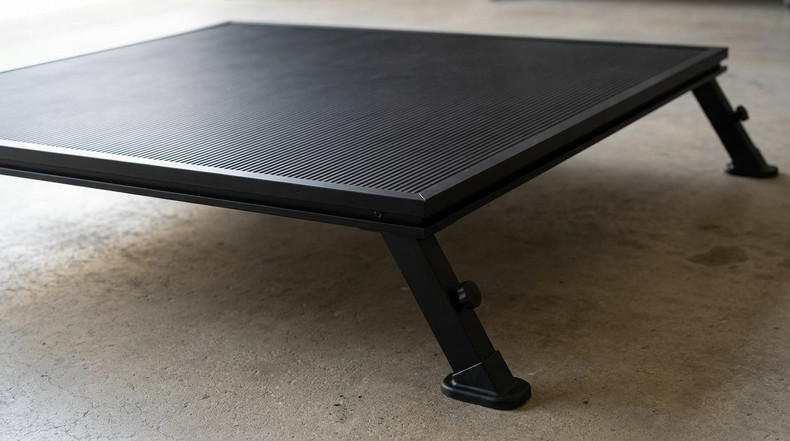
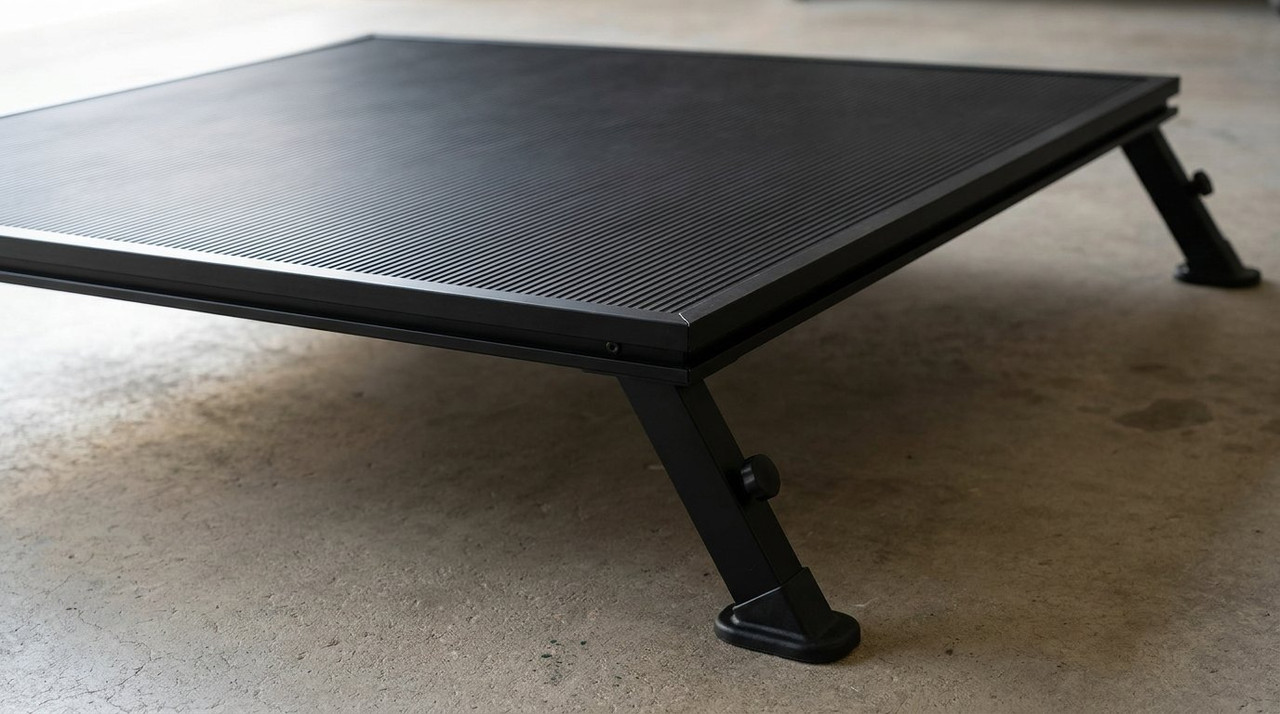
In the aluminum vs steel portable stage choice, aluminum is lighter than steel at the same size and does not rust the way steel does, which suits venues that move a stage often. Steel is heavier. A MyStage deck is aluminum with a black diamond-plate top, weighs 42 lbs (19 kg) and is rated to hold 3,400 lbs (1,542 kg).
This guide is for institutional buyers and venue operators in Canada: school boards, universities, churches, municipalities and event venues. It compares the two materials in general terms, separates the frame from the deck surface, and lists the questions to put to any supplier before you sign a purchase order.
What is the difference between the frame and the deck surface?
The frame is the structure that carries the load, including the legs and supports, while the deck surface is the top people stand and walk on. A stage described by one material may use another material somewhere else, so ask what each part is made of.
- Frame: the legs, supports and connecting parts that hold the deck up and transfer weight to the floor.
- Deck surface: the walking top. Common tops include metal plate, wood and carpeted or coated panels.
- Diamond plate: metal sheet with a raised diamond pattern on its face, used for walking surfaces.
For MyStage, the verified specification is an aluminum deck with a black diamond-plate surface, 4 ft x 4 ft (1.22 m x 1.22 m), with five legs: four angled legs plus a center leg that reduces bounce. If the material of each leg matters for your specification, ask MyStage to confirm it in writing.
Is aluminum or steel lighter for a portable stage?
Aluminum is lighter than steel for the same size of part, which is the main reason it is used for stages that are carried and set up by hand. Steel is denser, so a steel platform of the same footprint is generally heavier to lift, load and store.
Weight matters most in venues where the stage moves: a gym that switches between sport and assemblies, a sanctuary reset each week, a municipal hall shared by several user groups. A MyStage deck weighs 42 lbs (19 kg), folds to 2 ft x 4 ft (0.61 m x 1.22 m) and has a shoulder strap so one person carries it.
Lighter does not automatically mean weaker, so compare rated loads directly. Each MyStage deck is rated to hold up to 3,400 lbs (1,542 kg). Ask any steel or aluminum supplier for the rated load per deck, in writing, and whether it applies at every leg height.
Material comparison: aluminum vs steel portable stages
The table compares the two materials in general terms. It is not a comparison of specific brands, so use the last column to get each supplier's actual answer.
| Factor | Aluminum (general) | Steel (general) | What to ask any supplier |
|---|---|---|---|
| Weight | Lighter than steel for the same size | Heavier than aluminum for the same size | What does one deck weigh as carried, with legs? |
| Corrosion | Does not rust the way steel does, though it can still corrode under some conditions | Rusts when bare steel is exposed to moisture, so it depends on its coating or finish | What finish is used on each part, and what care do you recommend? |
| Handling | Easier to carry by hand at the same size | Heavier pieces may need more people or equipment | How many people does one deck need to carry and set up? |
| Maintenance | Keep clean and dry; check fasteners and legs | Keep clean and dry; watch for chips or scratches in the coating | What should staff inspect, and how often? |
| Climate exposure | Suits indoor and outdoor use when cleaned and stored dry | Damaged coatings are the weak point in wet or salty conditions | Is outdoor use covered, and how should the stage be stored between events? |
Assumption, stated plainly: the maintenance and climate rows describe general care for metal equipment, not MyStage instructions. Ask MyStage for its care guidance before you write it into a facilities procedure.
How does the Canadian climate affect the choice?
Canadian venues expose stages to moisture, winter salt tracked in on boots, and big temperature swings between storage and use, so corrosion behavior and drying routines matter more than in a dry climate. Material is one part of the answer; how you clean and store the stage is the other.
Steel depends on its coating. Where a coating is chipped or scratched, bare steel exposed to moisture can rust. Aluminum does not rust the way steel does, which is one reason it is common for outdoor gear, but it is not immune to all corrosion, and salt is hard on most metals.
Practical steps for any metal stage, which apply equally to aluminum and steel:
- Wipe off slush, salt residue and mud after each use, especially after winter events with foot traffic from outside.
- Let decks dry fully before folding or stacking them.
- Store indoors, off a wet floor, in a space where the stage will not sit in meltwater.
- Inspect legs, connections and the walking surface before each setup, and set aside any part that does not lock or level properly.
Do not treat any portable stage as permanent outdoor equipment unless the supplier confirms it in writing. MyStage is designed to make a flat, level surface on uneven ground outdoors, with legs that adjust to level each deck. Ask MyStage how to care for it and store it after outdoor use.
How does material weight affect freight and handling on arrival?
Material weight shows up twice: on the freight quote and on delivery day, when someone has to move the shipment from the truck to storage. Ask each supplier for the total shipping weight and the number of packages before you compare quotes.
MyStage Canadian orders ship from our warehouse in Ajax, Ontario, to everywhere in Canada except Quebec. Freight is quoted per order: contact MyStage with the products and your postal code, and you get an estimate before ordering. Because the order ships from inside Canada, there are no customs or brokerage steps and your institution is not the importer. Confirm remote and northern addresses when you request your quote.
On the quote itself, ask how delivery works at your loading area and whether anyone on your side needs to be there to receive it. Then plan the internal move: with MyStage, each deck is a separate 42 lb (19 kg) piece that one person can carry, which you can check against your staff and route. The pre-order checklist for Canadian buyers covers the remaining quote questions.
Which material suits which Canadian venue?
Choose by how often the stage moves and who moves it. A stage that is set up and struck often by staff or volunteers favors light pieces that one person can carry. A stage that stays in place for long periods can accept heavier pieces, because handling happens rarely.
- Schools and universities: gyms and multipurpose rooms change use often, and storage is shared. See portable stages for Canadian schools and universities.
- Churches: weekly resets by volunteers put carry weight first. See portable church stages for Canadian worship spaces.
- Municipal and community venues: outdoor events on grass or pavement need legs that level on uneven ground, plus a drying and storage routine.
- Fixed installations: if a stage rarely moves, compare rated load, footprint and finish first, and weight second.
What should a purchasing committee ask before choosing?
Ask every supplier the same questions in writing, so the answers line up for your committee. Use this list as the request for information.
- What material are the deck, the walking surface and the legs, and what finish is on each?
- What does one deck weigh as carried, and how many people does it take to set up?
- What is the rated load per deck, and does it apply at every height?
- What care, cleaning and storage do you recommend for indoor and outdoor use?
- What does the warranty cover? MyStage provides a 60-day manufacturer guarantee covering defects.
- What is the total price at our size, and what is the freight estimate to our postal code?
To price MyStage at your footprint, use the Stage Builder, or browse sizes on the portable stage page. As one reference point, an 8 ft x 12 ft stage (6 decks) is US$3,720. Prices are in US dollars (USD); your card issuer converts the charge to Canadian dollars at its own rate and may add a foreign transaction fee.
Frequently asked questions
Is aluminum or steel better for a portable stage?
Aluminum is lighter at the same size, which favors stages that move often. Steel is heavier. Compare rated load, finish and setup crew for each product rather than choosing on material alone.
Is a MyStage deck made of aluminum?
Yes. Every MyStage stage is built from the same 4 ft x 4 ft (1.22 m x 1.22 m) aluminum deck with a black diamond-plate surface. Each deck weighs 42 lbs (19 kg) and is rated to hold up to 3,400 lbs (1,542 kg).
Will an aluminum stage rust in Canadian weather?
Aluminum does not rust the way steel does, but no metal stage should be left wet or salty. Clean it after use, dry it before folding, and store it indoors. Ask MyStage for its care guidance.
Can a portable stage be used outdoors in Canada?
MyStage is designed to make a flat, level surface on uneven ground outdoors, with legs that adjust to level each deck. Standard legs adjust from 4 to 28 in (10 to 71 cm). Plan cleaning and indoor storage between events.
Do Canadian buyers pay customs on a MyStage order?
No customs or brokerage steps apply, because Canadian orders ship from our warehouse in Ajax, Ontario. MyStage does not ship to Quebec. Confirm any applicable taxes on your quote.