
Choosing a stage
What Event Planners Should Know About Indoor vs Outdoor Portable Stages
You can feel it in your gut when a stage choice is wrong. The wobble. The slick surface. The crew scrambling with tools. The weather turning and everyone looking at you.
Let's make sure that never happens at your next show.
Key Highlights
- Match the event stage environment first, then pick the deck and accessories that keep people safe and confident.
- Indoor event staging favors clean floors, fast changeovers, and quiet setup with minimal scuff risk.
- A portable stage for outdoor events needs smart outdoor stage materials, moisture handling, and stability on uneven ground.
- A weather resistant stage is not one magic feature. It is the full system, frame, surface, connections, and how you manage rain plans.
- Modular systems let you scale from a single platform to a full layout fast, without hauling a heavy permanent rig.

Indoor vs Outdoor Portable Stages What Event Planners Should Know
You are not just picking a platform. You are picking how the day feels for your crew, your talent, your audience, and your client.
Indoors, the battle is usually time, tight spaces, and keeping the venue happy. Outdoors, the battle is usually the ground, the forecast, and keeping the show moving when conditions change.
A portable stage for all weather starts with realistic expectations. You can run a great outdoor show in unpredictable conditions, but only if the system is built for it and your team follows a few simple habits. That is where the difference shows up.
Event Stage Environment
Before you compare models, lock in the environment. This is the question we always ask first because it determines everything else.
Here is what changes the decision fast
- Surface under the stage, gym floor, ballroom carpet, grass, packed dirt, and asphalt
- Moisture risk, spilled drinks indoors, dew, and rain outdoors
- Wind exposure, open fields, rooftops, and courtyards between buildings
- Foot traffic intensity, quick speeches vs constant band changeovers
- Load needs, podium, and two speakers vs a full drum kit, amps, and multiple performers
If you only remember one thing, remember this. The event stage environment is the job site. Your stage has to behave like job site equipment, not a fragile prop.
Indoor Event Staging
Indoor event staging is where speed and cleanliness win. You want a system that sets up quickly, stays level, and does not punish you for tight load-ins.
Indoor Stage Platforms That Keep Venues On Your Side
Venues care about floors. Your client cares about a clean look. Your crew cares about not fighting the gear.
Look for these traits in indoor stage platforms
- A flat, level surface that feels solid underfoot
- A deck surface that is not slick when shoes pick up moisture from outside
- A footprint that stores well in a closet, truck pack, or back hallway
- Tool-free or near tool-free setup, so you are not hunting for a socket at 6 PM
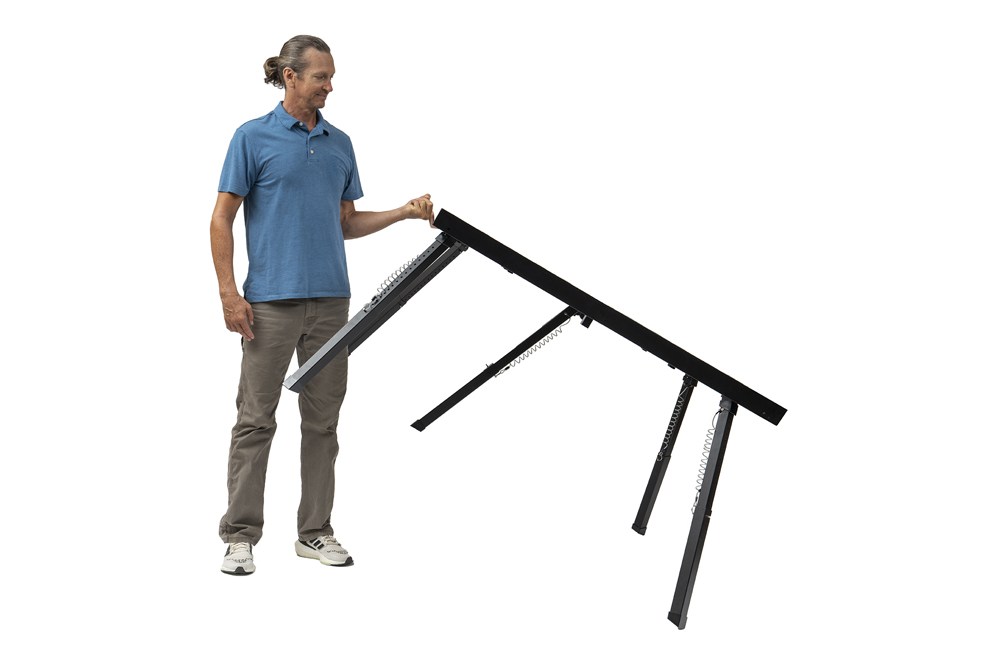
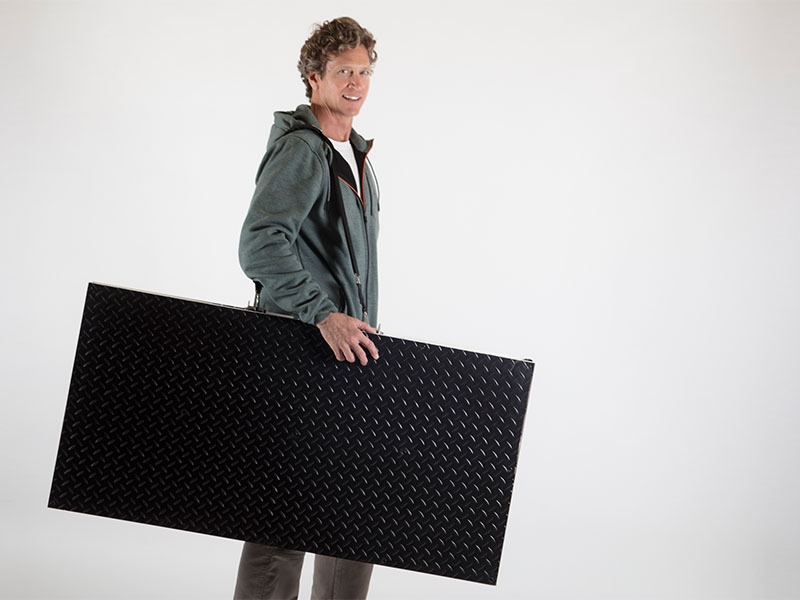
With MyStage, each 4'x4' portable stage deck folds down to a compact 2 ft by 4 ft size, and it is designed to carry easily with a shoulder strap. That matters when you are moving through doors, elevators, and backstage corners.
Fast Setup Is Not A Luxury Indoors
Indoor schedules are tight. You might have 20 minutes between a keynote and a live set. When a modular system is built for quick assembly, you protect the schedule and your crew's sanity.
MyStage offers tool-free setup and quick configuration, with one person able to set up a unit in about a minute, then connect additional units as needed. That is the kind of pace that keeps an indoor run of show on track.
Noise And Professionalism
Indoor rooms amplify everything. Dragging heavy sections, clanking hardware, and over-tightened bolts all show up in the room. A lightweight modular approach helps you work quieter and cleaner.
Our decks weigh about 40 lbs, which is a big deal for indoor crews working with limited hands and strict load-in rules.
Choosing Stage For Outdoor Use
Now we get into the fun part. Outdoors is where you earn your reputation as the planner who always has a plan.
Choosing stage for outdoor use means you plan for uneven ground and changing moisture. You also plan for audience safety, as slips and trips can occur outside.
Portable Stage For Outdoor Events
A portable stage for outdoor events needs stability and confidence, even when the ground is not perfect.
Ask these questions before you buy or rent
- Can you level the system reliably on uneven terrain
- Does the deck surface maintain grip when damp
- Is the frame corrosion resistant for repeated outdoor use
- Can you scale the footprint up or down based on weather and attendance
- Are guardrails, stairs, and skirting available for a finished, safe look
Our portable stage systems are modular and easy to set up. Our stages quickly create a flat, level surface nearly anywhere, and we can build large layouts by connecting multiple 4 ft by 4 ft units together.
Outdoor Stage Materials
Outdoor stage materials matter more than most people think. It is not only about strength. It is about what happens after ten rainy load outs, repeated sun exposure, and constant handling.
Materials we like to see for outdoor work
- High-grade aluminum frames for strength and corrosion resistance
- Deck finishes that resist moisture and maintain traction
- Connection hardware that stays secure after repeated setups
- Surfaces that resist scratches, so the stage still looks professional
We offer a high-grade aluminum frame that is lightweight, strong, and rust-resistant for outdoor shows, plus non-slip decking designed to resist moisture from spills or weather.
That combination is exactly what you want when your show day includes dew in the morning and a surprise shower at soundcheck.
Weather Resistant Stage
Let's be direct. A weather resistant stage is not a promise that nothing will ever happen. It is a stage designed to keep working when life happens.
A weather resistant stage plan includes
- A frame that does not corrode easily
- A deck surface that maintains grip and resists moisture
- A finish that holds up to wet shoes, spilled drinks, and sudden storms
- A storage plan that lets the system dry out properly after the event
Our weather-ready finishes and decks are built to withstand moisture, plus aluminum framing for outdoor durability.
Portable Stage For All Weather
When someone asks for a portable stage for all weather, what they usually mean is this.
They want to book outdoor shows with fewer cancellations and less panic.
Here is how we think about it
- The stage needs to be modular so you can shrink or expand based on the forecast and audience flow
- The deck must stay safe when damp
- The system must be light enough to move quickly if you need to reposition it
- Accessories must be available so safety does not get cut when timelines get tight
MyStage offers modular sizing, fast setup, and accessories like railings, stairs, and skirting so you can build an outdoor setup that looks finished and controls fall risk.
Indoor Stage Platforms Vs Outdoor Layouts
Indoors, we often build clean rectangles and focus on sightlines. Outdoors, we often build for crowd flow, camera lanes, and weather angles.
Sightlines And Sound
Outdoor stages often need height for sightlines, while indoor stages sometimes need lower profiles to work with ceiling height and lighting grids. The nice thing about modular systems is that you can adjust the plan without changing your whole inventory.
That's where our adjustable height and the ability to combine multiple pieces into different footprints come into play. That flexibility helps you match both indoor and outdoor staging needs without owning multiple unrelated systems.
Stability And Bounce
Outdoors, bounce becomes noticeable when the ground is soft or uneven and when the deck is undersupported. Indoors, bounce is usually caused by a rushed setup or uneven legs on hard floors.
The fix is the same in both places
- Use a system designed to create a flat, level surface
- Train the crew on consistent setup checks
- Use the right accessories for stairs and edges
- Keep the stage footprint appropriate for the load
We always focus on producing a flat, level, stable surface quickly, which is what keeps movement predictable for performers and presenters.
Buying Outdoor Portable Stage
Buying outdoor portable stage inventory is a serious decision because outdoor work is where gear gets punished.
We like to evaluate purchases through three lenses
- Safety for performers and audience
- Labor savings for your crew
- Consistency, so every event looks and feels professional
What To Look For When You Are Buying Outdoor Portable Stage Systems
These are the checks we recommend running, even if you are buying a small starter kit.
Build quality
- Aluminum or comparable corrosion resistant structure
- Non-slip surface designed to handle moisture
- Durable locking or connection hardware
Crew friendliness
- Compact transport and storage
- Weight that one or two people can move safely
- Setup speed that supports real event schedules
Scale and accessories
- Ability to connect units into larger layouts
- Guardrails, stairs, and skirting availability
- Clear operating instructions and weight guidance
Portable Stage For Outdoor Events That Still Looks Sharp Indoors
Event planners rarely live in one lane. You might do a ballroom awards night on Friday and a park concert on Saturday.
That is where modular staging earns its keep. When the system stores compact, sets up fast, and holds a professional look after repeated use, you stop worrying about whether your stage matches the vibe.
Check out our portable stages with finishes designed to hold up to the realities of concerts, including spills and storms, while still looking professional night after night.
Practical Setup Habits That Prevent The Ugly Surprises
Gear matters. Habits matter too. These quick practices keep both indoor and outdoor shows smooth.
Indoor habits we recommend
- Walk the venue path before load in, note tight doors and turns
- Keep a small floor protection kit ready where needed
- Do a quick level check on every deck before talent steps up
- Place stairs where foot traffic naturally flows
Outdoor habits we recommend
- Arrive early enough to assess the ground before you unload everything
- Keep basic moisture control on hand, towels, grip mats, and simple cover options
- Keep the edge safe, rails where needed, clear stair access, no improvised steps
- Build a weather plan into your schedule, not as an afterthought
Final Thoughts
If you plan events long enough, you learn this truth. The stage is where pressure shows up first. When the stage feels solid, everything else feels easier.
For indoor event staging, prioritize speed, clean transport, and a stable, level surface that keeps venues happy. For outdoor work, prioritize outdoor stage materials that handle moisture, corrosion, and uneven ground so you can run confident shows with fewer last-minute fixes.
If you are building a system that works in both worlds, choose modular options by MyStage. Our foldable 4 ft by 4 ft decks, lightweight build, fast setup, and expandable layouts make it easier to cover indoor stage platforms and outdoor gigs without stocking multiple incompatible systems.
Ready to spec a setup for your next venue or park booking. Grab the stage size you need now, then add decks, rails, stairs, and skirting as your calendar grows.
FAQs
1. Can we use the same system for indoor stage platforms and a portable stage for outdoor events?
Yes, if the system is modular and built with outdoor-ready materials. Look for aluminum framing and non-slip decking that resists moisture so you are not swapping gear between seasons.
2. What makes a stage a weather resistant stage?
It is the combination of corrosion resistant framing, a deck surface that maintains grip when damp, and finishes that hold up to spills and sudden storms. Storage and drying after the show matter too.
3. How fast can a crew set up MyStage for indoor event staging?
With MyStage modular stages, one person can set up a unit in about 1 minute and connect additional units as needed, with no tools required. That speed is ideal for tight indoor schedules.
4. What outdoor stage materials should we prioritize when buying outdoor portable stage inventory?
High-grade aluminum for the frame, moisture-aware non-slip decking, and connection hardware that stays reliable after repeated setups. Those choices reduce corrosion issues and help keep the footing consistent.
5. How do we scale the stage size when the event stage environment changes?
Choose a system designed to connect multiple decks into different shapes and sizes. That lets you adjust for crowd size, footprint limits, and forecast changes without starting from scratch.