
Drum risers
How to Elevate Your Drummer for Better Visibility: The Complete Drum Riser Height Guide
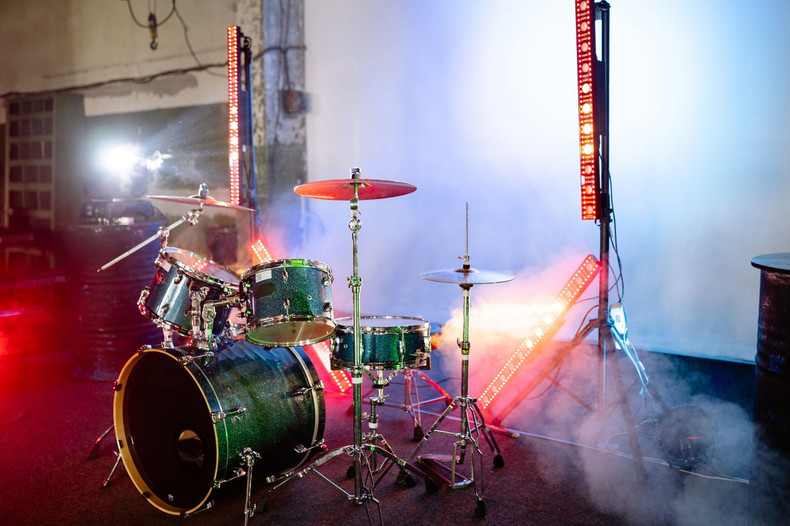
Elevating a drummer for better visibility requires choosing the correct drum riser height for your venue. Standard drum riser height ranges from 8 inches for small clubs and church stages to 36 inches for arena-scale productions. Height selection is driven by three variables: venue size, audience sightline requirements, and acoustic isolation goals — all of which this guide covers in full.
Every live performance has a drummer problem. Not a talent problem — a geometry problem. From the front row, the drummer is half-hidden behind a kick drum, floor toms, and a wall of monitor wedges. From the back of a 500-capacity venue, the drummer might as well not exist. The solution has been the same since the earliest days of rock staging: get the drummer off the floor.
Drum riser height is not a preference — it is an engineering decision with direct consequences for audience engagement, sound quality, and the overall production value of a live show. The current landscape of live performance demands that every element of the stage be optimized for both the human eye and the camera lens. A drummer buried behind their kit at floor level is a missed opportunity on both counts.
This guide covers everything you need to know about standard drum riser height, how height selection varies by venue and genre, the acoustic benefits of elevation, and how to configure a portable drum riser platform that matches your specific performance requirements.
What Is Drum Riser Height and Why Does It Matter?
Drum riser height refers to the vertical distance between the stage floor and the top surface of the drum platform — the surface the kit and drummer sit on. It is the single most impactful variable in drummer visibility and acoustic isolation. Even an 8-inch elevation creates a measurable difference in both sightlines and floor vibration decoupling.
The term "drum riser" encompasses every elevated platform designed to support a drum kit during live performance. Drum riser height is measured from the stage floor to the playing surface — not from ground level to the top of the kit. A drummer sitting on an 8-inch riser is 8 inches higher than a drummer sitting on the stage floor; their head and cymbals are correspondingly elevated above monitors, front fill speakers, and the eyeline of the first several rows of the audience.
Two distinct performance outcomes are determined by this measurement:
- Visibility: The primary reason most productions use a drum riser at all. Audience members beyond the front rows and camera operators positioned at the rear of a venue need the drummer to be elevated above obstructions — primarily front-of-house monitor wedges and the kit itself — to register as a visible performer rather than a sound source hidden behind equipment.
- Acoustic isolation: The secondary benefit, and one that matters significantly to front-of-house engineers. Every inch of elevation physically separates the resonating drum kit from the stage floor, reducing the transmission of low-frequency vibrations into the stage structure. This isolation translates directly to a cleaner mix.
- Stage presence and production value: The tertiary benefit — often underestimated. A drummer on an elevated platform occupies a defined space within the stage architecture. They become a visual anchor point for the entire band, improving the perceived production value of the performance regardless of the venue's size.
|
? Expert Insight: Why Engineers Prioritize Drum Riser Height Live sound engineers consistently identify drum riser height as one of the most underutilized mix tools available to a production. Even an 8-inch aluminum platform creates a measurable air gap between the kick beater and the stage floor, reducing the resonant coupling that causes low-frequency "mud" in mixes on wooden stages. At 12 inches and above, the isolation benefit extends to floor tom fundamentals — one of the most difficult frequencies to control in a live mix environment. |
Standard Drum Riser Height: What the Numbers Actually Mean
The standard drum riser height for most live performance applications is 8 to 12 inches. This range covers small clubs, churches, mid-size theaters, and most corporate event stages where the goal is modest elevation with meaningful floor isolation. Heights of 18 to 36 inches are reserved for large concert halls, arenas, and festival main stages where rear-of-house visibility is a production requirement.
Data from professional touring and event production consistently shows a clustering of drum riser heights around three practical ranges — each suited to a defined category of performance environment:
Low Profile: 6"–10"
The 6 to 10 inch drum riser height range covers the majority of non-touring live performance applications. This height delivers meaningful floor decoupling, provides visible elevation above standard floor monitor wedges, and keeps the drummer proportionate to other stage elements. It is the most-used range in church worship, small venue performance, and studio broadcast contexts.
At 8 inches — the most common single setting in this range — a drummer's upper body clears the top of most floor-mounted monitor wedges, making them visible to the first half of the audience in rooms up to approximately 300 seats. The aluminum platform at this height creates a significant acoustic boundary between the kit and the floor, with engineers reporting noticeable improvements in kick drum clarity even at this modest elevation.
Mid-Height: 12"–18"
The 12 to 18 inch range is the standard for mid-size venues seating 300 to 1,500 people. At this height, the drummer is visible from the rear of most club and theater environments, overhead cymbal positions clear the sightlines of standing audiences, and the acoustic isolation benefit reaches the floor tom and rack tom frequency range — not just the kick.
Rock and high-energy touring productions playing venues in this capacity range typically standardize on 12 inches as their minimum, with many productions specifying 16 to 18 inches to future-proof their setup for larger rooms on the same tour.
High Profile: 24"–36"
The 24 to 36 inch drum riser height range is the domain of large concert halls, theater productions with rear-of-house sightline requirements, and arena or festival main stages. At 24 inches, the drummer's full body is visible above front fill systems and front row obstructions from any position in a large venue. At 36 inches (3 feet), the drummer achieves maximum visual prominence — the kind that reads on camera at broadcast distances.
Productions specifying heights in this range typically use adjustable leg systems that allow the platform to be set precisely to the venue's geometry rather than defaulting to a fixed measurement. Safety considerations also become relevant at these heights — a stable, non-deflecting platform with a verified load rating is a non-negotiable requirement above 18 inches.
Drum Riser Height by Venue: A Reference Guide
Use this reference table to identify the starting point for drum riser height selection in your specific performance context. These are industry-informed recommendations — final height selection should account for the specific geometry of each venue.
Table 1 — Standard Drum Riser Height by Venue Type and Application
|
Context / Venue |
Recommended Height |
Why This Height |
Leg Option |
|---|---|---|---|
|
Small club / bar |
8" |
Separates kit from floor; minimal sightline block |
Shorties (8" setting) |
|
Mid-size venue |
10"–12" |
Clears first few rows; visible from mid-house |
Shorties (10" setting) |
|
Large concert hall |
18"–24" |
Full rear-of-house visibility over seated crowd |
Biggies (adjustable) |
|
Arena / festival stage |
24"–36" (up to 3') |
Drummer visible above monitor wedges and front fill |
Biggies (max setting) |
|
Church / worship |
8"–10" |
Modest elevation; professional sightline over congregation |
Shorties (8" or 10") |
|
Studio / broadcast |
8" |
Camera angles; floor isolation; no sightline requirement |
Shorties (8" setting) |
|
School / theater pit |
6"–10" |
Keeps drummer in frame; separation from adjacent instruments |
Shorties or standard leg |
The Shorties and Biggies leg options referenced in the table above are available as add-ons for any modular drum riser platform, allowing height adjustment without replacing the deck.
How Drum Riser Height Affects Sound Quality
Drum riser height has a direct and measurable effect on live sound quality through acoustic isolation. The elevated platform creates an air gap and structural discontinuity between the vibrating drum kit and the stage floor, reducing the transmission of low-frequency energy into the stage structure. Higher risers amplify this effect, with meaningful acoustic improvements documented at every height increment from 8 inches upward.
Understanding the acoustic mechanism behind drum riser isolation requires a brief physics context. A drum kit at floor level is essentially coupled to the stage surface — every stroke of the kick beater and every floor tom hit transmits vibration energy directly into the stage structure. That energy radiates outward through the floor, wall, and any surface in contact with the stage, producing sympathetic resonances that muddy the low end of the mix and make precise equalization at the mixing desk significantly harder.
An elevated drum riser interrupts this energy pathway. The platform's legs act as the only transmission points between the kit and the floor, dramatically reducing the surface area through which vibration energy transfers. The acoustic benefits scale with height:
Table 2 — Drum Riser Height vs. Visibility and Sound Isolation Impact
|
Riser Height |
Visibility Impact |
Sound / Acoustic Impact |
|---|---|---|
|
No riser (0") |
Drummer hidden behind kit and front monitors at most venues |
Maximum floor coupling — bass frequencies bleed into stage structure |
|
8" |
Drummer head and upper body visible from most floor positions |
Significant floor decoupling — noticeable reduction in stage rumble |
|
10"–12" |
Full upper body + cymbals clear from mid-house |
Strong isolation — kick and floor tom separation markedly improved |
|
18"–24" |
Full drummer visible from rear of large venues |
Excellent isolation; overhead mics benefit from reduced floor reflection |
|
36"+ (3') |
Maximum visibility — arena-scale sightlines achieved |
Best acoustic isolation; drummer above floor monitor bleed zone |
Monitor Bleed Reduction
One of the most practically significant acoustic benefits of drum riser elevation is the reduction of monitor wedge bleed into drum microphones. Floor-mounted monitor wedges transmit significant low-frequency energy through the stage surface — energy that couples directly into kick drum and floor tom microphone positions when the kit is at floor level. Elevation of 8 inches or more measurably reduces this coupling.
Live engineers working with elevated drum rigs consistently report that kick drum microphone positions benefit most immediately from riser elevation. The physical separation between the kick beater and the stage floor reduces the "thump" that monitor bleed adds to the kick mic signal — a frequency range (60–100 Hz) that is particularly difficult to equalize out without affecting the natural character of the drum sound.
|
? Expert Insight: The Engineer's Perspective on Riser Height The difference between a drum kit on the floor and a kit on even an 8-inch riser is immediately audible at front-of-house. You stop fighting the stage and start mixing the drums. At 12 inches, the floor tom fundamentals clean up noticeably. Above 18 inches, the overhead mics benefit from reduced floor reflection — you get a more accurate stereo image of the kit without the room's floor smearing the sound. Height is one of the cheapest acoustic wins available to any production. |
How to Choose the Right Drum Riser Height: A Step-by-Step Process
Choosing the correct drum riser height requires assessing venue capacity, audience sightline geometry, monitor configuration, kit size, and any genre or production aesthetic requirements. The process takes less than five minutes and eliminates the guesswork that causes productions to arrive at a venue with a riser that is either too short to be effective or so tall it creates safety and ergonomic concerns.
Follow this sequence for every new venue or event:
- Step 1 — Assess venue size: Identify the approximate seating or standing capacity and the distance from the stage to the rear of the audience. Small clubs under 200 people rarely need more than 8 to 10 inches. Venues over 500 people benefit from 12 to 18 inches minimum.
- Step 2 — Walk the sightlines: Stand at the rear of the venue and identify what the drummer would need to be elevated above to be visible: front monitors, drum shield if applicable, and any front-of-stage equipment. That obstruction height is your minimum effective riser height.
- Step 3 — Evaluate monitor configuration: Count the floor-mounted monitor wedges in front of and beside the drum position. Taller, wider wedges require more riser height to clear. IEM (in-ear monitor) productions with no floor wedges can often use lower risers.
- Step 4 — Consider kit configuration: A double bass setup with extended hardware needs a deeper, wider platform than a standard 5-piece. Larger kits require more deck sections — size the platform first, then confirm the height works ergonomically for the specific drummer.
- Step 5 — Select leg option: For heights of 8 and 10 inches, Shorties legs provide the quickest setup with tool-free installation. For heights from 12 inches up to 3 feet, Biggies legs offer adjustable settings that dial in precisely to your venue's geometry.
- Step 6 — Verify load rating: Confirm the platform's rated load capacity covers the combined weight of the kit, hardware, cymbals, and drummer with a safety margin. Platforms with a 5-point leg system — including a central fifth leg — eliminate mid-platform deflection under dynamic drumming load.
The modular platform system used in our portable drum risers allows any height configuration to be built from the same deck — eliminating the need to own multiple fixed-height platforms for different venues.
Drum Riser Height Recommendations by Genre and Performance Type
Genre and performance context meaningfully influence the optimal drum riser height. Rock and metal productions prioritize maximum visibility and typically specify 12 to 24 inches. Jazz and acoustic genres favor lower risers of 6 to 8 inches for aesthetic cohesion. Church worship productions standardize on 8 to 10 inches. Theater and orchestral pit settings often use the minimum effective height for the specific staging geometry.
Rock and Metal
High-energy performance genres where the drummer is a visual focal point benefit most from elevated drum risers. The standard in professional rock touring is 12 to 18 inches for mid-size venues, scaling to 24 to 36 inches at arena level. The drummer's physical energy is a critical part of the show — elevation amplifies it by giving the audience a clear sightline to every stroke.
Jazz and Acoustic
Acoustic and jazz productions typically prioritize stage intimacy and tonal cohesion over visibility maximization. Drum riser heights of 6 to 8 inches are standard, providing floor isolation without visually separating the drummer from the ensemble. The acoustic isolation benefit at this height is significant even if the visual impact is modest.
Church and Worship
Worship production teams consistently specify 8 to 10 inch drum riser heights — high enough to provide professional sightlines and meaningful acoustic separation, proportionate enough to maintain the aesthetic character of a worship stage rather than a rock concert rig. White skirting around the riser perimeter is a common finish choice in this context.
Theater and Educational
Theater pit orchestras and school percussion ensembles use drum risers primarily for kit separation and sound isolation rather than audience visibility. Heights of 6 to 10 inches are typical. The graduation stage and portable stage platform product lines address related staging requirements in educational and ceremony contexts.
DJ and Electronic Performance
Electronic drummers and hybrid DJ/drummer performers use elevated platforms as performance surfaces for electronic kits and controllers. The height requirements mirror those of acoustic drum rigs for equivalent venue sizes. See the DJ stage platform range for configurations optimized for electronic performance environments.
Drum Riser Platform Size: The Other Half of the Equation
Drum riser height is inseparable from platform size. A correctly elevated drummer on an undersized platform is a safety and performance risk — hardware hangs off the edge, the drummer cannot move freely, and the kit is not fully supported. Standard platform sizing for a 5-piece kit starts at 4x8 feet; double bass setups typically require 4x12 or 8x8 feet minimum.
Platform size and height work together to define the complete drum riser specification. The most common sizing errors in drum riser selection are:
- Undersized for the kit: A 4x4 foot deck works for compact electronic kits and solo studio setups. A standard 5-piece acoustic kit with cymbals extended to both sides needs 4x8 feet at minimum to keep all hardware on the platform.
- Ignoring the drummer's movement: Drummers who move dynamically during performance — reaching for extended cymbal positions, shifting weight for cross-stick work — need clear deck space around the kit perimeter. Size up one deck section if the drummer is physically active.
- Forgetting the throne: The drum throne is often positioned at or near the rear edge of the platform. Ensure the platform depth allows the throne to sit fully on the deck without the rear legs hanging off the edge.
The modular 4'x4' deck system allows platform size to be configured precisely for any kit layout. Full configuration and pricing for standard sizes are available on the drum risers product page.
Frequently Asked Questions: Drum Riser Height
Q1. What is the ideal drum riser height?
The ideal drum riser height depends on venue size and sightline requirements. For small clubs and church settings, 8 to 10 inches is the standard. Mid-size venues typically call for 10 to 12 inches. Large concert halls and arena stages benefit from 18 to 36 inches of elevation for full rear-of-house drummer visibility.
Q2. How tall should a drum riser be?
A drum riser should be tall enough to make the drummer visible above front-of-house monitors and the front rows of the audience at the specific venue. The minimum effective height for meaningful floor decoupling is 8 inches; the maximum practical height for most live performances is 36 inches, above which safety rails are typically required.
Q3. What is the standard drum riser height?
The most widely used standard drum riser height in live performance is 8 to 12 inches, covering the majority of club, church, and mid-size venue applications. This range delivers meaningful floor isolation and visible elevation above monitor wedges without the complexity or safety considerations of taller configurations.
Q4. How does drum riser height affect sound quality?
Drum riser height directly affects acoustic isolation by decoupling the kit from the stage floor. Even an 8-inch riser measurably reduces low-frequency vibration transmission into the stage structure. Higher risers extend this benefit to floor tom frequencies and reduce monitor wedge bleed into drum microphone positions, improving overall mix clarity.
Q5. Can drum riser height vary by music genre?
Yes. Rock and metal performances typically use 12 to 24 inches of elevation to maximize drummer visibility. Jazz and acoustic productions favor 6 to 8 inches for an intimate stage aesthetic. Church and worship productions standardize on 8 to 10 inches for professional presence without concert-scale elevation.
Q6. Are there adjustable drum risers?
Yes. Modular portable drum risers with interchangeable leg systems allow height adjustment without replacing the platform. Shorties legs provide 8 and 10 inch settings for standard use; Biggies legs adjust to any height up to 3 feet, allowing the same deck to serve venues of different sizes with a simple leg swap.
Q7. What drum riser height is best for rock bands?
Rock bands performing in mid-size venues typically use 12 to 18 inches of elevation to ensure the drummer is visible above front monitors and clearly in frame for audience and camera positions. Arena and festival performances benefit from 24 to 36 inches to achieve full rear-of-house sightlines.
Q8. What drum riser height is best for church worship teams?
Church worship environments typically call for 8 to 10 inches of drum riser elevation. This height provides professional visibility above the worship team and front monitors while keeping the drummer proportionate to other stage elements and maintaining the aesthetic of most sanctuary stage designs.
Q9. Is there a maximum drum riser height?
There is no universal maximum, but practical and safety limits apply. Above 36 inches, the drummer's arm position becomes ergonomically awkward and safety rails are required in most jurisdictions. Most professional touring productions cap drum riser height at 24 to 36 inches for safety and ergonomic reasons.
Q10. What platform size do I need for my drum riser?
A standard 5-piece drum kit with cymbals typically requires a 4x8 foot platform. Double bass setups and large touring rigs generally need a 4x12 or 8x8 foot configuration. Modular platforms that link 4x4 foot decks allow precise sizing to match any kit footprint without custom fabrication.