
Choosing a stage
Portable Stage vs Stage Riser: Which Format Fits Your Event?
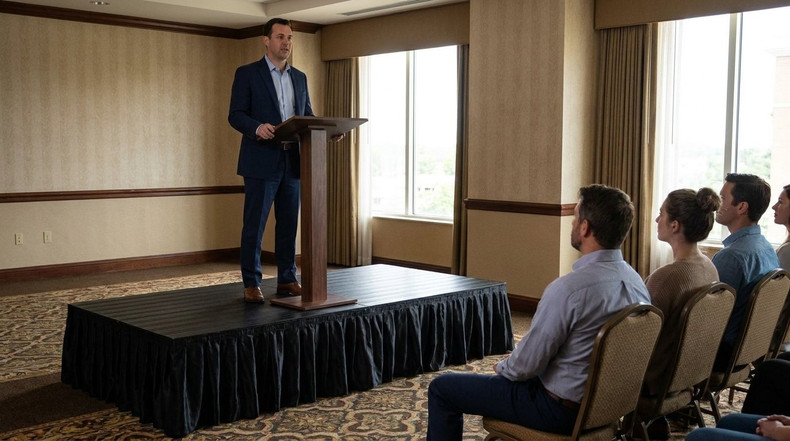
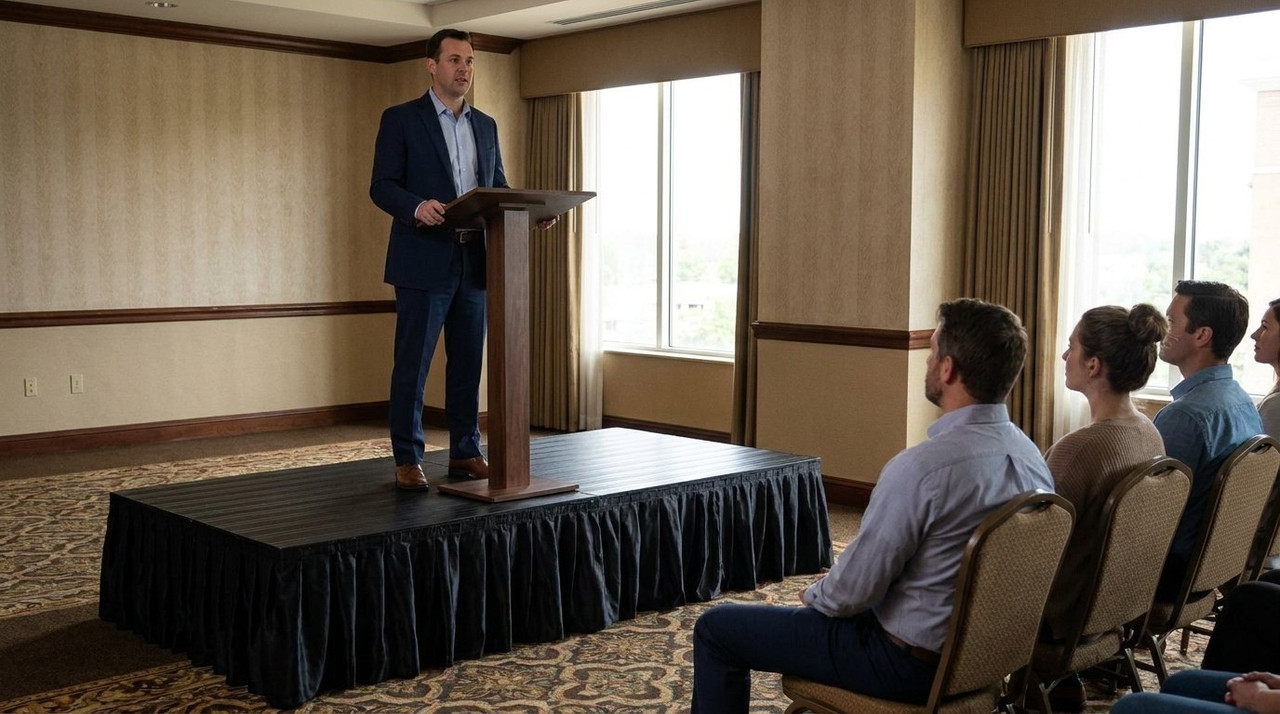
A portable stage is the main raised platform for a performance, such as a speaker, band or ceremony. A stage riser is a smaller platform that lifts one part of it, such as a drum kit, camera or row of singers. With MyStage, both use the same 4 ft x 4 ft (1.22 m x 1.22 m) deck.
This guide is for event planners and music programs in Canada deciding which platform type to order. It defines the terms, shows where suppliers use them interchangeably, and matches each format to the activity on top of it. Where a point is general planning practice rather than a MyStage specification, it is labeled that way.
What is the difference between a portable stage and a stage riser?
The difference is the job, not the material. A portable stage is the main performance platform that the audience faces. A stage riser lifts a person, instrument or piece of equipment above the floor or above the main stage, so it can be seen, heard or filmed better.
- Portable stage: a temporary raised platform for the main act. It is usually sized for every performer and their equipment.
- Stage riser: a smaller raised platform with one purpose. Common types are drum risers, choir risers and camera risers.
- Stage platform: the individual deck or section that both stages and risers are built from.
Why do suppliers use "stage" and "riser" interchangeably?
Many suppliers, MyStage included, build both from the same platform, so the label depends on how it is used. A two-deck 4 ft x 8 ft MyStage layout can be the stage for a keynote speaker in one room and a drum riser on a larger stage in another.
Some products sold as "risers" are a different design, for example fixed tiered steps made only for choirs. Before ordering, ask whether the product is a general platform or a single-purpose riser, and whether it adjusts in height. That tells you whether it can serve more than one event type.
Which format fits each use? A use-case matrix
Use this matrix to match the activity to a platform type and a starting MyStage layout. The starting sizes are planning assumptions, not rules; measure your performers, equipment and room, and adjust with the Stage Builder.
| Use | Format that usually fits | Starting MyStage layout (assumption) | What to check |
|---|---|---|---|
| Speakers and presenters | Small portable stage | 4x4 (1 deck) for one person at a lectern, 4x8 (2 decks) for a panel table or two speakers | Sightlines from the back row, a step up or stairs, and a railing on open edges |
| Bands | Portable stage, often with a drum riser on top or beside it | 8x12 (6 decks) or larger, depending on band size and backline | Space for amplifiers and monitors, cable runs, and where the heaviest items sit |
| Drums | Drum riser | 4x8 (2 decks) for a compact kit, 8x8 (4 decks) for a kit with room for the throne and hardware | A flat, level surface, the kit's footprint, and edge clearance for the drummer |
| Choirs | Choir riser or a wide, low portable stage | A long layout such as 8x16 (8 decks) or 8x20 (10 decks), sized to the number of rows and singers | Rows and heights, railings along the back edge, and safe steps on and off |
| Cameras | Camera riser | 4x4 (1 deck) for one camera and operator, 4x8 (2 decks) for two | A stable, level surface, a clear view over the audience, and space for the tripod and operator |
| Seated groups | Low portable stage | A layout sized for the chairs, such as 8x16 (8 decks) for a head table or panel | Chair legs back from every edge, a railing on open sides, and a low height that keeps faces visible |
What does a MyStage platform offer for either format?
Every MyStage stage and riser uses the same deck: 4 ft x 4 ft (1.22 m x 1.22 m), aluminum, with a black diamond-plate surface. Each deck weighs 42 lbs (19 kg), folds in half to 2 ft x 4 ft (0.61 m x 1.22 m), and has a shoulder strap, so one person carries it.
Each deck has five legs (four angled legs plus a center leg that reduces bounce), sets up in about a minute with no tools, and is rated to hold up to 3,400 lbs (1,542 kg). Decks connect to each other with wingnuts, and the legs adjust to level the deck on uneven ground outdoors.
How high should a stage or riser be?
The right height depends on the job: a main stage needs to clear the audience's heads, and a riser needs to lift one element above what is around it. MyStage standard legs adjust from 4 to 28 in (10 cm to 71 cm), Shorties give 8 in and 10 in (20 cm, 25 cm) settings, and Biggies go up to 36 in (91 cm).
Shorties suit low risers, such as a drum riser on a floor-level setup or a low platform for a seated panel. Biggies suit a camera riser that has to see over a standing crowd.
Can one set of decks serve as both a stage and a riser?
Yes, and that is the practical case for buying a general platform system. A school music program can use eight decks as an 8x16 concert stage in the spring and split them into a drum riser and a camera riser for a gym assembly, as long as each layout gets the legs and accessories it needs.
Plan the accessories per layout. Railings come in 4 ft (1.22 m) sections, stairs (three steps, grip tape and a railing) fit stages up to 28 in (71 cm), a single step up suits lower platforms, and skirting is 16 ft x 28 in (4.88 m x 71 cm) in black or white with Velcro adhesive.
How do you pick the right platform type, step by step?
- Name the activity. Write down who or what goes on the platform: one speaker, a band, a drum kit, singers, a camera or a seated group.
- Decide on one platform or two. If one element needs to sit higher than the rest, plan a main stage plus a riser rather than one tall stage.
- Measure the footprint. Measure the kit, chairs, tripod or rows, add room to move, and round up to whole 4 ft (1.22 m) decks.
- Choose the height. Pick standard legs, Shorties or Biggies based on sightlines and the setting.
- Add safety accessories. Mark open edges for railings and choose stairs or a step up for access.
- Price it and ask for freight. Price the layout in the Stage Builder, then contact MyStage for a shipping estimate.
What do common stage and riser layouts cost?
MyStage prices are in US dollars (USD). A 4'x4' Portable Stage Deck is US$659, a 4'x8' stage (2 decks) is US$1,260, a 4'x12' stage (3 decks) is US$1,890, and an 8'x8' stage and riser (4 decks) is US$2,480.
Larger stages include an 8'x12' (6 decks) at US$3,720 and an 8'x16' (8 decks) at US$4,960. Shorties are US$200, Biggies are US$250, railings are US$99 per 4 ft section, and stairs are US$299. Your card issuer converts the charge to Canadian dollars at its own rate and may add a foreign transaction fee. Confirm any applicable taxes on your quote.
See the drum riser collection, the camera riser collection and the full portable stage collection for current layouts.
How does ordering a stage or riser work in Canada?
Canadian orders ship from our warehouse in Ajax, Ontario, to everywhere in Canada except Quebec, and there are no customs or brokerage steps for the buyer. Freight is quoted per order: contact MyStage with your products and postal code for a shipping estimate before ordering.
Use the quote to ask about delivery timing and how the order is received at your school, church or venue, and confirm remote and northern addresses when you request it. For school purchasing, portable stages for Canadian schools and universities covers the planning side.
Frequently asked questions
Is a stage riser the same as a stage platform?
A stage platform is the deck or section itself, and a riser is a platform used to lift one element, such as a drum kit or camera. With MyStage, risers and stages use the same 4 ft x 4 ft (1.22 m x 1.22 m) deck.
What size drum riser do I need?
A compact kit usually fits a 4 ft x 8 ft (two-deck) riser, and an 8 ft x 8 ft (four-deck) riser leaves room for the throne and hardware. Measure your kit and its spread before you order.
Can I put a riser on top of a portable stage?
MyStage has not published guidance on stacking a riser on top of a stage in the facts this guide uses. Describe the layout to MyStage and get a written answer before you plan one.
Can MyStage decks work as choir risers?
MyStage decks build wide, level platforms with railings available in 4 ft (1.22 m) sections. If your choir needs several tiered rows, ask MyStage how to arrange decks at different heights before ordering.
How low can a MyStage riser go?
Standard legs adjust down to 4 in (10 cm). Shorties give fixed 8 in and 10 in (20 cm, 25 cm) settings for low risers.