
By venue
Portable Stage vs Permanent Stage for Multiuse Canadian Venues
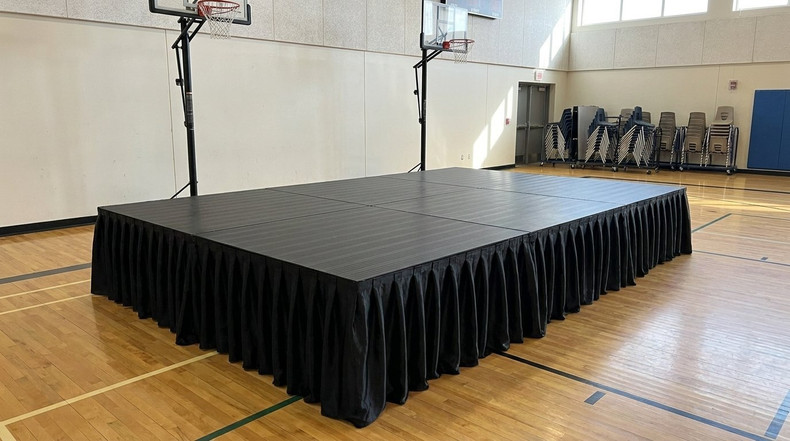
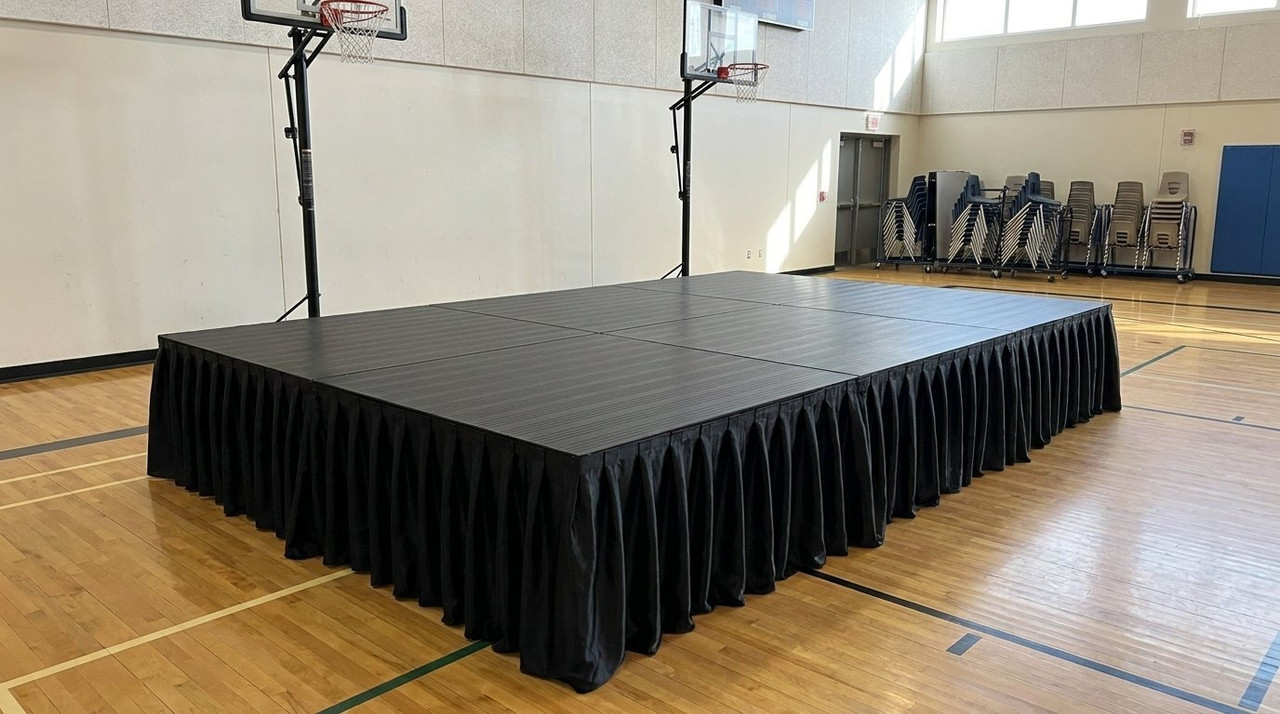
A portable stage suits a multiuse venue when the room must change between events and the stage has to be stored or moved. A permanent stage suits a room that hosts performances often, always in the same spot, and can give up that floor space for good. For most multipurpose rooms, the deciding factors are frequency, storage and staff time.
This guide is for community, school, church and hotel facilities in Canada weighing a built-in stage against a portable one. It uses a ten-year view because both options are long-term decisions, and it works through scenarios instead of savings claims, since your costs depend on your building. Where a point is general planning practice rather than a MyStage specification, it is labeled that way.
What counts as a portable stage and a permanent stage?
A permanent stage is built into the building and stays in place. A portable stage is a free-standing platform that is set up for an event and taken down afterward.
- Permanent stage: a fixed platform constructed as part of the room, usually through a renovation or new build. It is treated as part of the building.
- Portable stage (temporary stage): a platform assembled for an event and removed after it. A modular portable stage is built from connecting decks, so its size can change.
- Multipurpose room: a space that serves different uses, such as a gym, parish hall, ballroom or community hall, where the floor is needed for more than performances.
When does a permanent stage make sense?
A permanent stage makes sense when the room is mainly a performance space. If the room hosts performances most weeks, always faces the same direction, and never needs that floor area for anything else, a fixed stage removes setup and storage from the routine.
It is a building project, not a purchase. A fixed platform falls under building rules for structure, exits and access, and in Canada those are set by provincial and territorial codes, many based on the National Building Code of Canada. Check with your municipality and a qualified designer about permits, accessibility and how a stage affects the room's occupancy before you budget for one.
When does a portable stage make sense?
A portable stage makes sense when the room has to clear between events. A school gym that holds classes on weekdays and a concert on Friday, a church hall used for worship, dinners and youth nights, or a hotel ballroom booked for weddings and conferences all need the floor back after the stage comes down.
A portable stage also goes where the event goes. The same decks can serve the main hall, a smaller room, or an outdoor event on the grounds, where the legs adjust to level each deck on uneven ground.
Ten-year decision framework: portable vs permanent stage
Score each row for your venue over the next ten years. The "leans" columns are general planning guidance, not rules; one strong factor, such as no storage space, can outweigh the rest.
| Factor | Question to answer for the next ten years | Leans portable when | Leans permanent when |
|---|---|---|---|
| Space | Does the room need its full floor area for other uses? | The floor is needed for sports, dining, worship seating or exhibits. | The stage area is never used for anything else. |
| Frequency | How many events a year need a stage, and is that likely to change? | Stage events are occasional or seasonal, or the program may grow or shrink. | Stage events are frequent and steady. |
| Storage | Is there a dry, secure space and a clear route to it? | A storeroom or closet can hold the folded decks, and the route is clear. | There is no storage space at all. |
| Labor | Who sets up and strikes, and how much time do they have? | Staff or volunteers are available for each event. | No one is available to set up for events. |
| Maintenance | What upkeep and inspection will the platform need over the years? | You can inspect decks, legs and connections before each use and replace parts as needed. | Upkeep can be folded into building maintenance. |
| Room flexibility | Will the stage need a different size, shape, height or position? | Layouts change by event, or the stage moves between rooms or outdoors. | The size, height and position never change. |
How do the scenarios play out in real venues?
These scenarios are illustrations to test against your own building, not case studies.
- School gym: classes and sports need the floor most days, and concerts, assemblies and graduations need a stage a few times a year. Space and room flexibility point to portable. See portable stages for Canadian schools and universities.
- Church hall or sanctuary: if the platform is used every service in the same place, permanent may fit. If the hall also hosts dinners and events, or the congregation meets in a rented space, portable fits. See portable church stages for Canadian worship spaces.
- Hotel ballroom: every booking wants a different layout, from a head table to a band to a keynote. Room flexibility points to portable.
- Community hall: bookings range from fitness classes to theater nights. If the hall has a storeroom and a volunteer crew, portable keeps the floor open; if it is a dedicated performance hall, permanent may fit.
What does a MyStage portable stage involve to run?
Every MyStage stage is built from the same 4 ft x 4 ft (1.22 m x 1.22 m) aluminum deck with a black diamond-plate surface. One person sets up a deck in about a minute with no tools, and decks connect to each other with wingnuts.
Each deck folds in half to 2 ft x 4 ft (0.61 m x 1.22 m), weighs 42 lbs (19 kg), and has a shoulder strap, so one person carries it to storage. Each deck has five legs, including a center leg that reduces bounce, and is rated to hold up to 3,400 lbs (1,542 kg). Castors (set of 5) with brakes and a gear bag that holds one folded deck help with moving and storing.
Height adjusts by event: standard legs from 4 to 28 in (10 cm to 71 cm), Shorties at 8 in and 10 in (20 cm, 25 cm), and Biggies up to 36 in (91 cm). MyStage provides a 60-day manufacturer guarantee covering defects. Spare standard legs are sold separately (listed at US$75, single or set of 5); ask MyStage about care and other spare parts for long-term use.
How do you assess a portable stage system for your venue, step by step?
- List a typical year of events. Note each event's stage size, height, room and audience.
- Complete the ten-year table. Answer each row with your facilities team and note any factor that decides the case on its own.
- Find the storage spot. Measure the storeroom and the route from it to each room the stage will be used in.
- Plan the crew. Name who will set up and strike, and walk through one setup in your schedule.
- Price the layouts. Use the Stage Builder to price the largest layout you need, then check that smaller layouts use the same decks.
- Get a freight estimate. Contact MyStage with the products and your postal code.
What does a portable stage cost as a capital purchase?
A portable stage is a one-time equipment purchase, priced per layout. MyStage prices are in US dollars (USD): an 8'x8' stage (4 decks) is US$2,480, an 8'x12' stage (6 decks) is US$3,720, an 8'x16' stage (8 decks) is US$4,960, a 12'x20' stage (15 decks) is US$8,775, and a 16'x20' stage (20 decks) is US$11,600.
Packages add accessories. The 8'x16' package with 8 decks, 6 railings, stairs and 3 skirts is US$5,999, and the 12'x20' with 15 decks, 7 railings and 6 skirts is US$9,200. Your card issuer converts the charge to Canadian dollars at its own rate and may add a foreign transaction fee. Confirm any applicable taxes on your quote. For comparing ownership with renting, see portable stage rental vs purchase in Canada.
How does ordering work for a Canadian venue?
Canadian orders ship from our warehouse in Ajax, Ontario, to everywhere in Canada except Quebec. Because the stage ships from inside Canada, there are no customs or brokerage steps for the buyer.
Freight is quoted per order and is not calculated at checkout. Contact MyStage with your products and postal code for a shipping estimate, and ask on the quote about delivery timing and receiving at your building. Confirm remote and northern addresses when you request your quote. Browse current layouts in the portable stage collection.
Frequently asked questions
Is a portable stage cheaper than a permanent stage?
It depends on your building, because a permanent stage is a construction project with design, permit and building costs that vary by site. Price the portable layout you need in the Stage Builder and compare it with a written quote for the built-in option.
Can a portable stage be left set up between events?
A MyStage stage can stay assembled as long as the room allows, then be taken down when the floor is needed. If it stays up, inspect the legs and connections before each use.
How much storage space does a portable stage need?
Each MyStage deck folds to 2 ft x 4 ft (0.61 m x 1.22 m), so the space depends on how many decks you own. Measure your storeroom and route, then compare them with your deck count.
Can we start with a small portable stage and expand later?
Yes. Every MyStage stage uses the same deck, so a venue can start with a smaller layout and add decks later. Railings, stairs and skirting are sold separately as needs grow.
Do we need a permit for a portable stage?
Rules for temporary stages vary by province, municipality and venue. Check with your local authority and your venue's insurer for your event type, and keep their guidance with your stage specifications.